

Saving Your First ₹100,000: The Ultimate Roadmap to Your First Financial Milestone (2026 Guide)
“The first ₹100,000 is the hardest. The second comes much faster because you’ve already built the habits.”
Saving your first ₹100,000 (₹1 Lakh) is one of the most rewarding financial milestones in life. It isn’t just about accumulating money—it’s about developing discipline, building confidence, and creating a strong financial foundation.
Whether you’re a student, a fresher, a salaried employee, a freelancer, or someone just starting your financial journey, this guide will show you exactly how to save your first ₹100,000 without sacrificing your lifestyle.
By the end of this article, you’ll have a practical roadmap, actionable strategies, and a realistic timeline to achieve your first lakh.
Why Is ₹100,000 Such an Important Milestone?
Many people underestimate the significance of saving their first lakh.
In reality, it represents something much bigger than the amount itself.
Saving ₹100,000 means:
- You’ve developed healthy financial habits.
- You understand budgeting.
- You know how to delay gratification.
- You’re financially more secure.
- You’re ready to start investing seriously.
- Unexpected expenses become less stressful.
Think of it as crossing the first mountain in your financial journey.
Once you’ve reached it, the next milestones become much easier.
Step 1: Know Your Current Financial Position
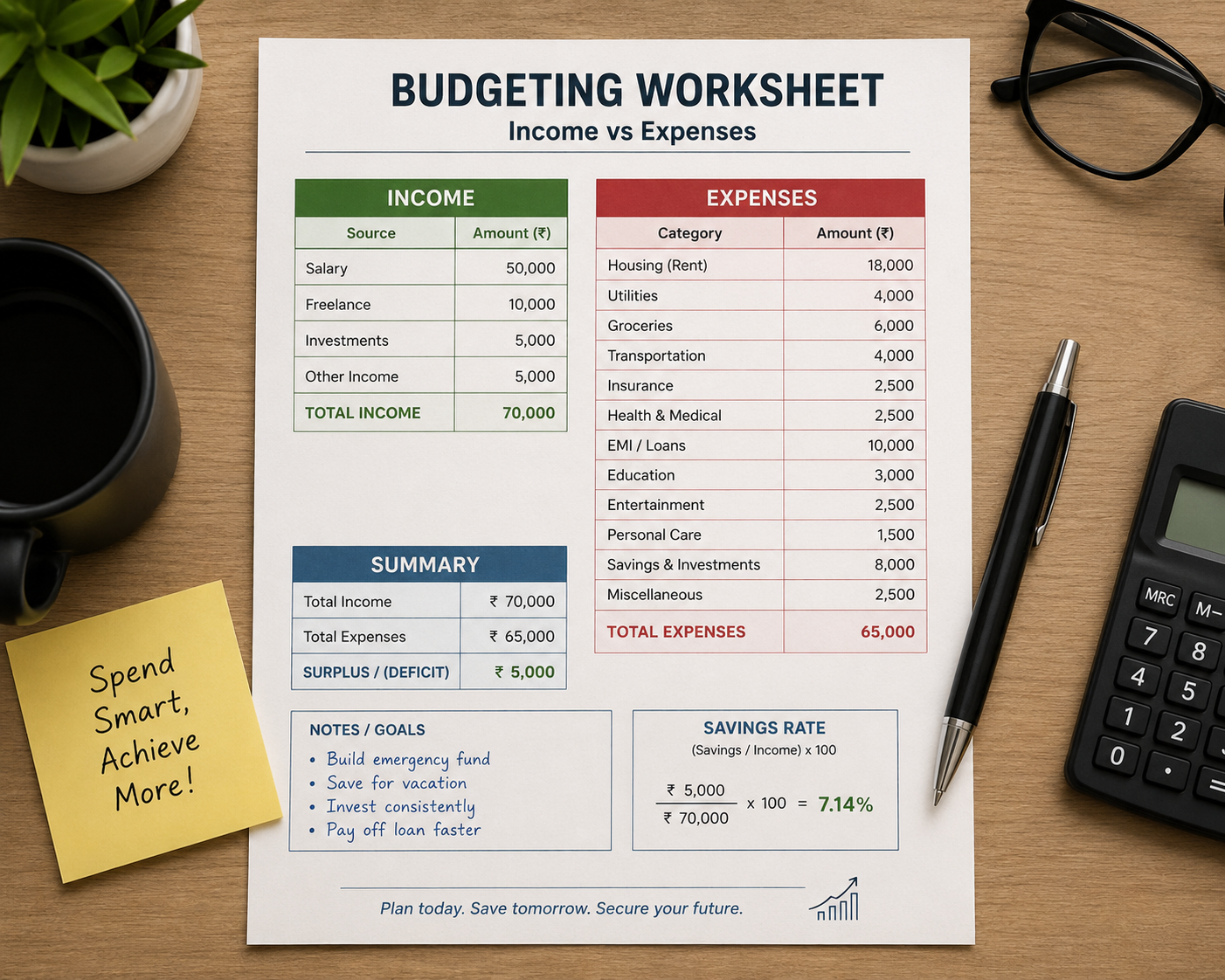
Before you save money, you need to understand where your money goes.
Ask yourself:
- How much do I earn monthly?
- How much do I spend?
- What are my unnecessary expenses?
- Do I have debt?
- How much do I currently save?
Create three categories:
Income:
- Salary
- Freelance income
- Bonuses
- Side hustles
- Rental income
Fixed Expenses:
- Rent
- EMI
- Internet
- Insurance
- Transportation
Variable Expenses:
- Dining out
- Shopping
- Entertainment
- Online subscriptions
- Travel
The difference between your income and expenses is your saving potential.
Step 2: Set a Clear Savings Goal
Instead of saying, “I’ll save money.” Say, “I’ll save ₹100,000 within 12 months.”
Goals work because they create urgency.
Example:
Target Savings: ₹100,000
Time: 12 months
Monthly Savings Needed:
₹100,000 ÷ 12 = ₹8,334
If your timeline is:
- 24 months → ₹4,167/month
- 18 months → ₹5,556/month
- 10 months → ₹10,000/month
Breaking large goals into monthly targets makes them manageable.
Step 3: Follow the 50-30-20 Rule
One of the easiest budgeting methods is the 50-30-20 Rule.
50% Needs
- Rent
- Food
- Bills
- Transportation
30% Wants
- Movies
- Restaurants
- Shopping
- Vacations
20% Savings
- Emergency fund
- Investments
- Financial goals
If possible, increase savings to 30% or even 40% until you reach ₹100,000.
Step 4: Pay Yourself First
Most people save what’s left after spending.
Successful savers do the opposite.
The formula is:
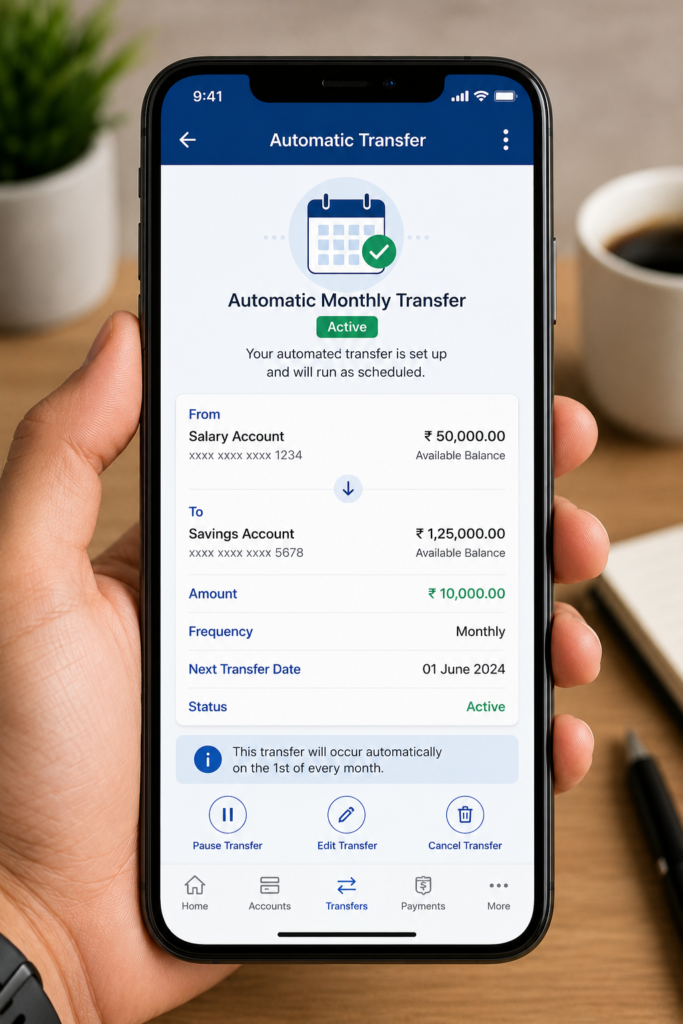
Income → Savings → Expenses
As soon as your salary arrives:
- Transfer savings automatically.
- Don’t wait until the end of the month.
Automation removes temptation.
Step 5: Build an Emergency Fund First
Before investing aggressively, create a basic emergency fund.
Start with:
- ₹20,000
- Then ₹50,000
- Eventually 3–6 months of expenses
Why?
Life is unpredictable.
Medical emergencies.
Job loss.
Car repairs.
Family emergencies.
Without emergency savings, you’ll rely on credit cards or loans.
Step 6: Cut Expenses Without Feeling Miserable
Saving money doesn’t mean living poorly.
Instead, remove unnecessary spending.
Examples:
Cancel Unused Subscriptions
Many people pay for:
- Netflix
- Prime Video
- Spotify
- Gym memberships
that they rarely use.
Review subscriptions every three months.
Cook More Meals
Ordering food: ₹350/day
Cooking: ₹120/day
Monthly savings: Around ₹6,000.
Limit Online Shopping
Before buying something:
Wait 48 hours.
Most impulse purchases disappear after two days.
Avoid Lifestyle Inflation
When income increases:
Don’t immediately upgrade:
- Phone
- Car
- Apartment
- Clothing
Increase savings instead.
Step 7: Increase Your Income
There’s a limit to cutting expenses.
There’s almost no limit to increasing income.
Ideas include:
- Freelancing
- Content writing
- Graphic design
- Teaching online
- Affiliate marketing
- Selling digital products
- Blogging
- Photography
- YouTube
- Stock photography
Even an extra ₹5,000/month reduces your saving timeline significantly.
Step 8: Avoid High-Interest Debt
Credit card debt can destroy your savings journey.
Example:
Credit Card Interest:
36% annually.
Savings Account Interest:
2–4%.
You lose money by saving while carrying expensive debt.
Prioritize paying off:
- Credit cards
- Personal loans
- Payday loans
Step 9: Keep Savings Separate
Don’t keep savings in the same account you use daily.
Instead:
- Separate savings account
- Liquid mutual fund
- High-interest savings account
When money isn’t easily accessible, you’re less likely to spend it.
Step 10: Start Investing Once You Build Savings
Saving protects money.
Investing grows money.
After building an emergency fund, consider:
- Mutual Funds (SIP)
- Index Funds
- Fixed Deposits
- Public Provident Fund (PPF)
- National Pension System (NPS)
The earlier you invest, the more time your money has to grow through compounding.
Sample 12-Month Savings Roadmap
| Month | Savings Goal | Total Savings |
|---|---|---|
| Month 1 | ₹8,500 | ₹8,500 |
| Month 2 | ₹8,500 | ₹17,000 |
| Month 3 | ₹8,500 | ₹25,500 |
| Month 4 | ₹8,500 | ₹34,000 |
| Month 5 | ₹8,500 | ₹42,500 |
| Month 6 | ₹8,500 | ₹51,000 |
| Month 7 | ₹8,500 | ₹59,500 |
| Month 8 | ₹8,500 | ₹68,000 |
| Month 9 | ₹8,500 | ₹76,500 |
| Month 10 | ₹8,500 | ₹85,000 |
| Month 11 | ₹8,500 | ₹93,500 |
| Month 12 | ₹8,500 | ₹102,000 |
Congratulations!
You’ve crossed your first lakh
Common Mistakes That Delay Saving ₹100,000
1. Waiting for a Higher Salary
You don’t need a huge salary.
You need consistent saving.
2. Ignoring Small Expenses
Daily coffee.
Food delivery.
Cab rides.
Online subscriptions.
Small leaks sink big ships.
3. Not Tracking Spending
What gets measured gets improved.
Track every rupee.
4. Emotional Spending
Shopping when stressed is expensive therapy.
Find healthier alternatives:
Exercise
Reading
Walking
Meditation
5. No Financial Goals
Money without direction disappears quickly.
Key Takeaways
✔ Track every rupee.
✔ Create a monthly budget.
✔ Save before spending.
✔ Automate savings.
✔ Reduce unnecessary expenses.
✔ Increase your income whenever possible.
✔ Build an emergency fund.
✔ Start investing after reaching your savings foundation.
✔ Stay consistent.
✔ Celebrate milestones.